 | 3rd Sq, 4th Cav, 25th Inf Div January 31 - February 07, 1968 |  |

| 3rd Sq, 4th Cav, 25th Inf Div January 31 - February 07, 1968 | |
| TET Offensive, January 31, 1968 | ||||
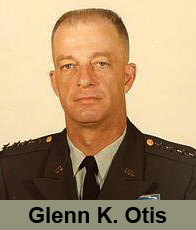 |
LTC Glenn K. Otis Squadron Commander November 1967 – May 1968 Deceased: February 21, 2013, Carlisle, Pennsylvania Most noted for his brilliant leadership during the battle for Tan Son Nhut airbase on January 31, 1968. An attacking force of 2,500 communist troops were attempting to overrun the base from the vicinity of a textile factory on the opposite side of Highway 1. When requested to provide relief to the beleaguered base defenders, then LTC Otis immediately dispatched two line platoons of C Troop along with C Troop HQ elements, with orders to link up with and place themselves under the command of the base defenders. |
|||
|
Story submitted by Peter Wells, on February 18, 2026. The radio crackled with a sound that every commander dreads. The Tet Offensive had just begun. But the tip of the spear was aimed at Tan Son Nhut Air Base. It was the brain of the American war machine. If Tan Son Nhut fell, the US command would be decapitated. The war would be effectively lost in a single night. The 3rd Squadron, 4th Cavalry Regiment. His tanks and Armored Personnel Carriers (APCs) were scattered, guarding unrelated checkpoints. He didn't wait for permission. It was a suicide mission. Otis had a handful of tanks and fewer than 400 soldiers. Below him, the base was burning. From the air, Otis saw the entire battle unfolding. He saw that the enemy was about to overrun the critical bunkers. He radioed his troops on the ground Troop C and guided them through the maze of buildings and burning hangars. He told them exactly where the enemy was massing. But the enemy was relentless. They had RPGs (Rocket Propelled Grenades) that could punch through the thin armor of the American APCs. Otis landed his helicopter in the middle of the firefight to evacuate the wounded and resupply his men with ammo. He knew that if his line broke, the headquarters and likely the war was gone. They fought until their gun barrels melted. The enemy was broken. Glenn Otis had saved Saigon. He became the Commander of the U.S. Army in Europe during the tense final decade of the Cold War. After Vietnam, the US Army was broken. Morale was low. Equipment was bad. He looked at the disaster of Vietnam and said, "Never again." The Abrams Tank. He turned a broken conscript army into the professional, high-tech force that would later crush the Iraqi Army in Desert Storm in 100 hours. He died in 2013. |